Task
- To offer a resilient method for monitoring water quality and nitrate levels in the harsh aquatic environment of the Mississippi River
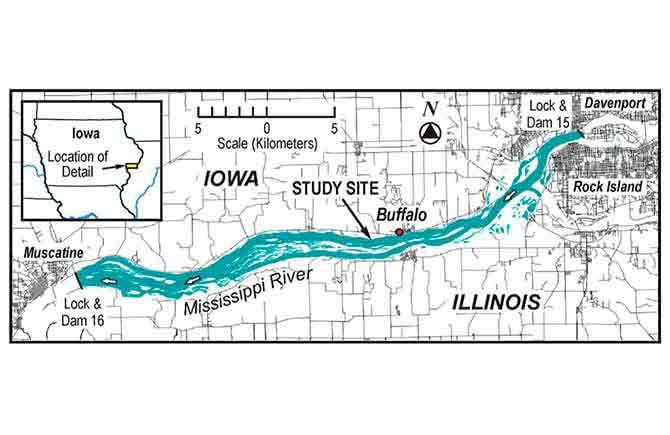
- To publish real-time water quality data from sensor clusters in Pool 16 that is viewable remotely
- To provide continually accurate water quality data for analysis in conjunction with the diurnal mussel study
Monitoring Solution
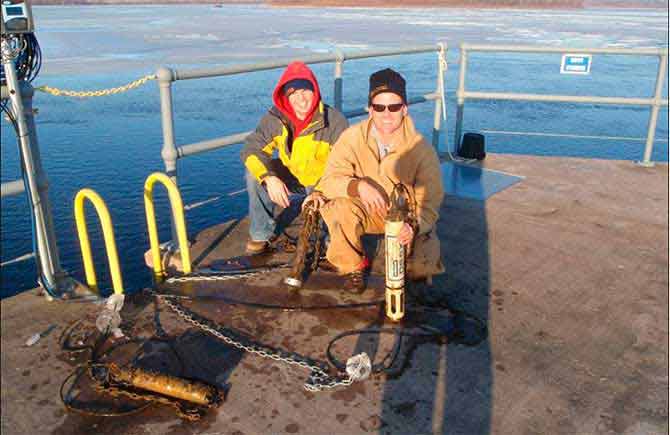
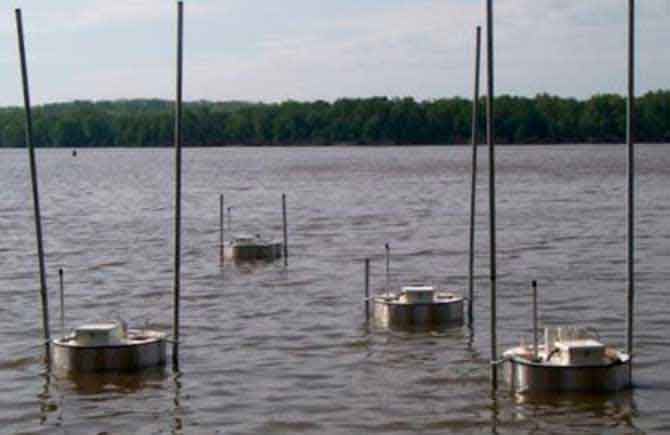
Six sensor clusters were deployed in Pool 16 with the Hydrolab DS5X multiparameter sonde and Hach Nitratax nitrate sensor.
The Hydrolab DS5X is a multiparameter sonde designed for long-term deployment in aquatic environments.
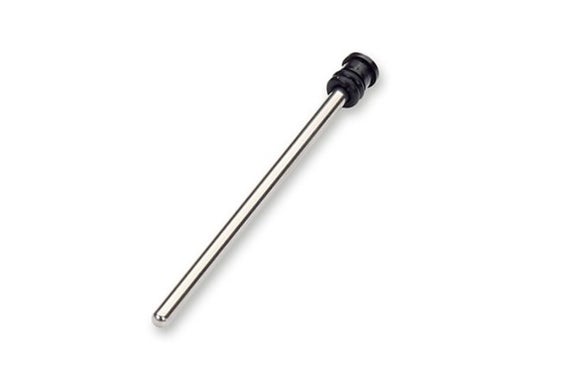
The Hach Nitratax sensor accurately measures nitrate levels by continuously measuring UV light absorbed by nitrates.
Water quality and nitrate data were transmitted to data loggers from the sensor clusters every 15 minutes.
Data were regularly analyzed in conjunction with information gathered from the freshwater mussel beds.
The Advantages
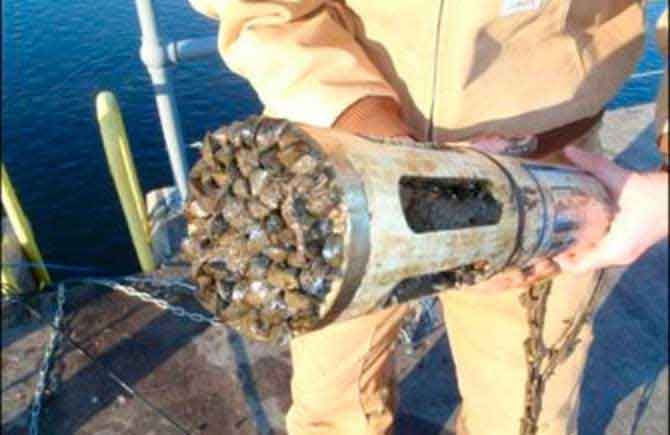
- The self-cleaning Nitratax sensor continued recording and transmitting data despite the presence of sediment and zebra mussels.
- The DS5X multiparameter sonde’s central cleaning system kept sensors in operation while minimizing power consumption.
- Long-term deployment in harsh aquatic conditions was possible due to high-grade plastic, stainless steel, and titanium materials used for both instruments.
- Remote data transfer with error warnings and web publishing enabled troubleshooting and easy access to data for users in the lab and field.
Summary
The Hydrolab DS5X and Hach Nitratax sensors successfully collected water quality data over time despite harsh aquatic conditions.
The water quality data collected by the two instruments played a key role in the larger study involving freshwater mussels and the nitrogen cycle.
Discovery of diurnal nitrate dynamics helped validate the use of sensors to measure highly time-sensitive data in large-scale systems such as the Mississippi River.
Technology
Hydrolab DS5X
Multiparameter sonde
Active data transmission (via GSM/SMS)
Hach Nitratax™ plus sc 5mm
Nitrate sensor
Active data transmission with sc100 universal controller