Background and Research Objectives
The combined analysis of water level data, water flow measurements, and detailed records of physical conditions forms the basis for quantifying the specific effects of crop cutting on both water levels and the Manning number, which expresses resistance to free water flow in a watercourse. These datasets also allow analysis of the temporal variation of these effects and assessment of how changes in channel shape influence flow resistance and overall water conveyance capacity.
The overarching hypothesis of the project is that new crop‑cutting methods and optimized cutting times can be identified to improve water flow capacity, while simultaneously delivering positive ecological outcomes. In many streams today, crop cutting is not optimised for either drainage efficiency or environmental conditions.
Research Hypotheses
The project tests the following specific hypotheses:
- Selective cutting of swamp plants in watercourses will increase flow capacity, as swamp plants offer greater resistance to water flow than submerged aquatic plants.
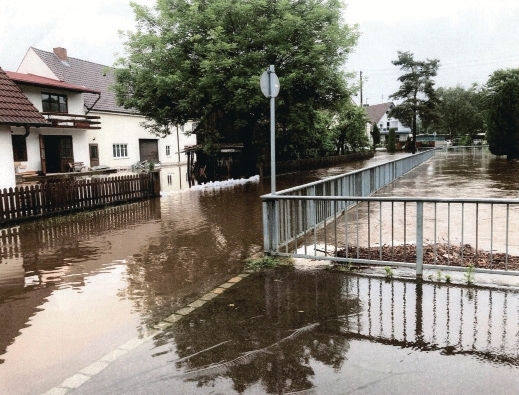
- Brink cutting will significantly improve flow capacity during high‑runoff events, when flood risk is greatest, as vegetation along the brinks particularly restricts water conveyance at large discharges.
- Ecological target achievement is more likely with selective swamp‑plant cutting and brink cutting, as aquatic plants create physical variation in watercourses and thereby improve habitat conditions for flow‑dependent organisms.
- Optimizing the timing of crop cutting can enhance both hydraulic performance and agricultural value, as biomass in watercourses is highest in late summer, while drainage demand is often greatest during periods of intensive field work.
The project is conducted over a five‑year period, which is necessary to systematically document the long‑term effects of different crop‑cutting methods and timing on water flow capacity and biological conditions.
Monitoring Solution
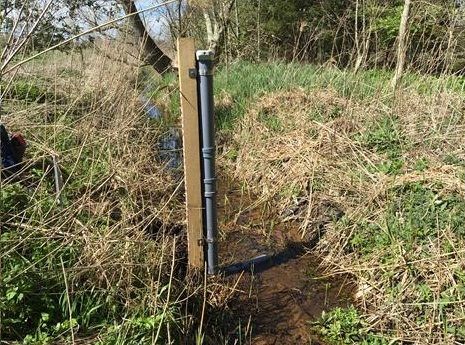
Orbicon is responsible for establishing and operating the 65 hydrometric monitoring stations required to document the impacts of crop cutting on water conveyance capacity.
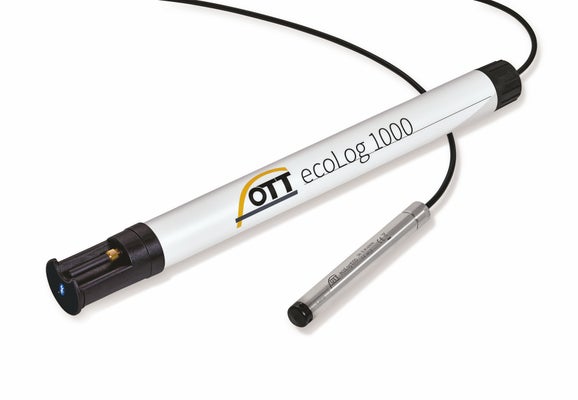
To assess the effects of vegetation, crop‑cutting practices, and channel‑shape development on water levels and flow capacity, an OTT ecoLog 500 water level logger is installed at each test section. The logger records water levels with millimetre precision at short time intervals.
To isolate the effects of vegetation and crop cutting from variations caused by changing discharge (as higher flows naturally result in higher water levels), additional water flow measurement stations have been installed. With continuous water‑level recordings and approximately 10 discharge measurements per year, detailed and reliable flow data can be derived for each test reach.